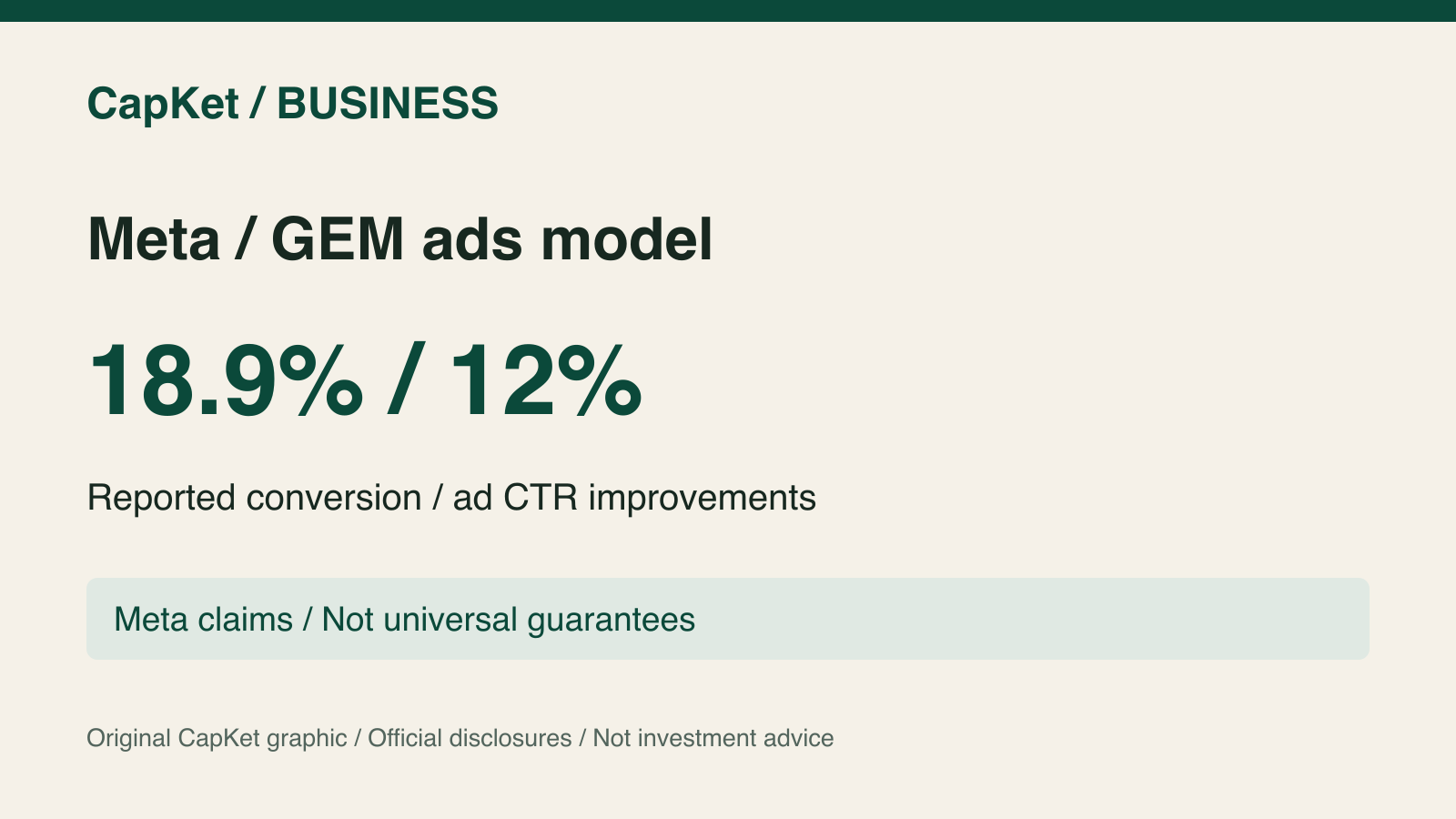
Meta says the 2026 generation of its Generative Ads Model, or GEM, uses a central foundation model learning across its advertising platforms rather than isolated models for each domain. In an October 13, 2026 engineering post, the company reports 18.9% conversion improvement and 12% improvement in ad click-through rate across its ad surfaces and objectives. Those figures describe Meta’s reported outcomes; they are not an independently verified benchmark or a guaranteed improvement for an individual campaign.
What the figures do—and do not—describe
| Measure | Official figure or status |
|---|---|
| Latest technical post | October 13, 2026 |
| Conversion improvement | 18.9%, reported by Meta |
| Ad click-through-rate improvement | 12%, reported by Meta |
| Additional reported conversion uplifts | Facebook 5.8%; Instagram 4.1%; off-site 1.6% for targeted users over the past year |
| Independent CapKet benchmark | Not performed |
| Guaranteed advertiser gain | Not established |
A conversion is an action counted toward an advertising objective, while click-through rate, or CTR, concerns clicks relative to ad impressions. Neither metric is the same as revenue, profit or return on advertising spend. The additional platform-level figures in Meta’s post should not be added to 18.9%, or treated as a single universal uplift. The company presents them as separate outcomes with their own scope.
What changed in the model
Meta describes GEM as learning signals across platforms such as Facebook, Instagram and Reels, covering multiple advertising objectives. It also discusses transferring information from the large central model to models used for serving recommendations. This technical account is about advertising infrastructure; it is distinct from Facebook’s separate Your algorithm controls for organic Feed and Reels content.
An earlier August 3 engineering article explains GEM training efficiency. It is supporting technical background, not a new October announcement or independent confirmation of the current advertising figures. Training efficiency is also not the same measure as conversion improvement or advertiser cost savings.
How an advertiser should read the announcement
The October post does not supply enough campaign-specific evidence to infer an exact gain for every advertiser, market or objective. CapKet has not reproduced Meta’s measurement, verified results for a particular account, or established a guaranteed lower acquisition cost. A practical evaluation would compare actual campaign outcomes on a consistent attribution basis and budget, separating clicks from conversions and business revenue. This is a measurement consideration, not a recommendation to buy advertising or increase spending.
Read our separate AI infrastructure availability report.
Official sources and checks
Sources checked: 14/10/2026, 10:49:45 IST. Official announcement · Supporting issuer context
Recorded source observation: . This is a source-check timestamp, not a market quote or a new article update.